
Most Popular
-
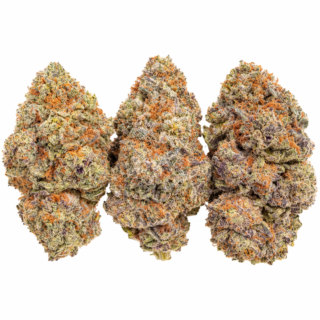 Purple Oreo Strain
Price range: $350.00 through $600.00
Purple Oreo Strain
Price range: $350.00 through $600.00
-
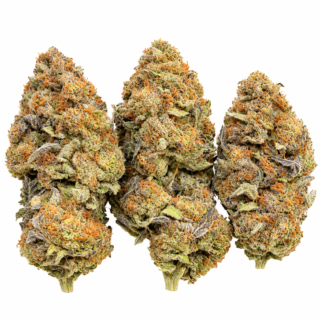 Blueberry Dum Dum Strain
Price range: $300.00 through $500.00
Blueberry Dum Dum Strain
Price range: $300.00 through $500.00
-
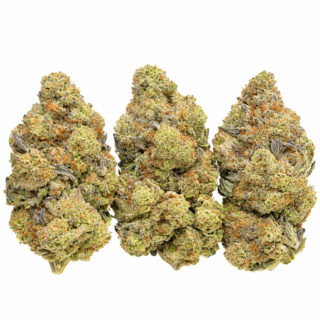 Grease Candy Strain
Price range: $400.00 through $700.00
Grease Candy Strain
Price range: $400.00 through $700.00
-
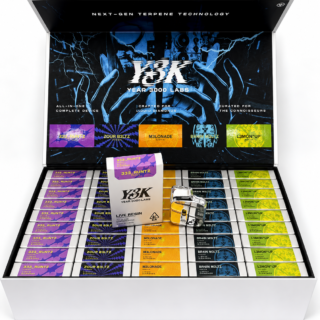 Y3K Disposable
$20.00
Y3K Disposable
$20.00
-
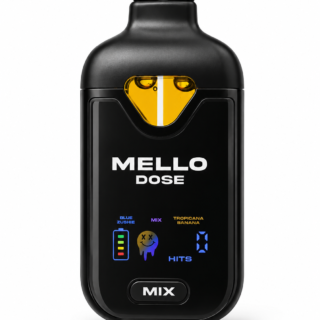 Mello Dose 2G Disposable
$30.00
Mello Dose 2G Disposable
$30.00
LA Mousse (NVE) Hash
Price range: $100.00 through $2,200.00
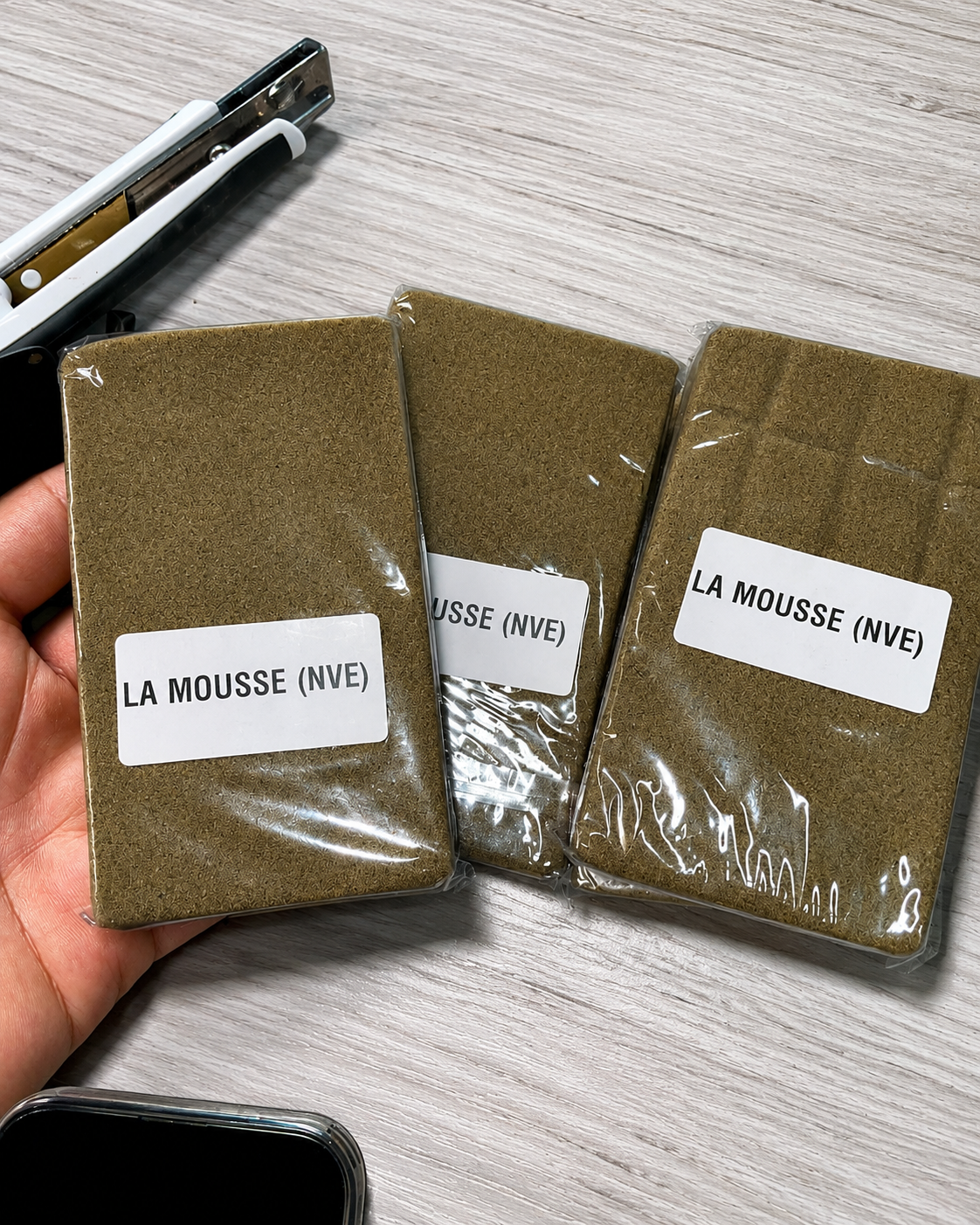
La Mousse (NVE) Hash is presented in sealed transparent packaging with a distinctive “LA MOUSSE (NVE)” label. This guide examines its visible appearance, packaging, texture, product identification, and the information buyers should verify before making purchasing decisions. Because the supplied packaging does not establish potency, cannabinoid content, production method, origin, or laboratory results, those specifications are not presented as confirmed facts.
LA Mousse (NVE) Hash: What the Label, Texture and Available Evidence Tell You
A pack marked “LA MOUSSE (NVE)” gives you a name, but it does not give you a complete product history. That distinction matters with hash, where informal market terms can be repeated so often that they start sounding like formal grades, production methods, or guarantees of potency.
Here, the clearest facts are simple: there are three individually sealed, rectangular brown-green blocks, and each carries a white label reading “LA MOUSSE (NVE)”. Beyond those observations, important questions remain open. The label does not establish a strain, cannabinoid percentage, country of origin, extraction method, producer, batch number, laboratory result, or what “NVE” stands for.
That does not make the label meaningless. It simply means LA Mousse hash should be understood by separating what can actually be established from what the name might imply in informal European cannabis terminology.
This guide does exactly that.
What Is LA Mousse Hash?
“LA Mousse” or simply “mousse” is a name encountered in European hash conversations and listings. It is commonly used informally for resin with a relatively soft, light, crumbly, or aerated character.
The difficulty is that LA Mousse is not a standardized scientific grade of cannabis resin.
There is no universal rule saying that every product called mousse must come from one country, contain a particular percentage of THC, use one strain, or be produced through one exact process. Consequently, two products sold under the same broad term may differ considerably.
At the formal level, cannabis resin or hashish is produced by separating resin-rich trichome material from cannabis plant material and subsequently forming or compressing it. Traditional production can involve techniques such as sieving or rubbing, while other methods also exist.
That broad definition is useful. It tells us what cannabis resin is without pretending that the words LA Mousse identify the precise production history of these particular packs.
What Can We Actually Establish About LA Mousse (NVE)?
The strongest product description starts with the visible evidence rather than filling gaps with common claims about mousse hash.
| Detail | Evidence level | What can reasonably be said |
|---|---|---|
| Product label | Confirmed | Each pack reads “LA MOUSSE (NVE)” |
| Number shown | Confirmed | Three separate packs are present |
| General form | Confirmed | Rectangular compressed blocks |
| Exterior color | Confirmed | Brown, olive-brown to green-brown appearance under the lighting |
| Packaging | Confirmed | Each block is enclosed in clear plastic |
| Surface | Observable | Fine, densely textured surface is visible |
| “NVE” meaning | Unknown | The abbreviation should not be expanded without documentation |
| Weight | Unknown | Cannot be reliably determined visually |
| THC/CBD | Unknown | Requires appropriate testing |
| Terpenes | Unknown | Requires appropriate analysis |
| Strain | Unknown | Not established by the label |
| Origin | Unknown | Not established |
| Producer | Unknown | Not established |
| Production method | Unknown | Cannot be identified from appearance |
| Contaminants | Unknown | Cannot be ruled in or out visually |
| Authenticity/provenance | Unknown | Label and appearance alone cannot establish either |
What Does “NVE” Mean on LA Mousse?
The label reads LA MOUSSE (NVE), but those three letters should be left exactly as written unless reliable documentation explains them.
It would be easy to turn NVE into a supposed producer, region, process, grade, or product abbreviation. Doing that without evidence would convert speculation into product information.
There is another practical reason for restraint: short abbreviations are particularly ambiguous. The same three letters can have completely different meanings depending on the seller, producer, language, or supply chain.
Therefore:
Product name: LA Mousse
Additional label: NVE
Meaning of NVE: not established
If accompanying batch documentation eventually defines NVE, the definition can be added. Until then, retaining the abbreviation is more accurate than guessing.
What Does LA Mousse (NVE) Look Like?
The three blocks have a broadly similar appearance.
They are flat, rectangular pieces with relatively even edges and a densely textured surface. Their visible color falls roughly within an olive-brown, green-brown, or muted golden-brown range, although photography, lighting, camera processing, and the clear wrapping can all change how those colors appear.
The surface contains a large amount of fine visual detail rather than looking completely smooth.
There are no clearly visible branded wrappers, elaborate graphics, laboratory stickers, QR codes, cannabinoid values, strain names, or batch information on the front-facing portions. The main identifier is the plain white label.
That minimalist presentation tells us very little about provenance.
It also illustrates an important point about judging hash online: a photograph can describe appearance surprisingly well, but it cannot establish composition.
Does LA Mousse Have a Specific Texture?
The word mousse naturally encourages assumptions about softness.
That is understandable, especially because the term is often used informally to distinguish softer or more friable resin from very hard, heavily compressed hash.
But there is a difference between discussing the market meaning of a word and describing the physical behavior of a specific block.
A photograph cannot tell you reliably whether these blocks:
- bend easily,
- crumble under finger pressure,
- become softer when warmed,
- break cleanly,
- feel dry or oily,
- contain a hard interior,
- or have the same texture throughout.
Surface appearance provides clues, not proof.
This is particularly important when comparing mousse vs traditional hash. “Traditional hash” itself covers an enormous range of resin products and production traditions. It is therefore too broad to serve as one fixed texture category.
LA Mousse vs Traditional Hash
There is no clean scientific dividing line where one side becomes “mousse” and the other becomes “traditional hash.”
Hashish is a broad family of cannabis resin products.
The EUDA describes traditional cannabis-resin production as involving the separation of resinous trichomes, including through rubbing and sieving, followed by compression. Different materials and processing techniques can produce very different final characteristics.
So a comparison is better framed like this:
| Question | LA Mousse terminology | Cannabis resin generally |
|---|---|---|
| Formal scientific category? | No established universal mousse grade | Cannabis resin is an established product category |
| Texture | Often used informally for softer/friable material | Can range substantially |
| Color | No universal color | Highly variable |
| THC level | Not defined by “mousse” | Varies considerably |
| Origin | Name alone does not prove it | European resin has multiple supply sources |
| Production | Cannot be inferred from the name | Multiple production techniques exist |
| Quality | Cannot be established by terminology | Requires broader evidence |
This distinction prevents “mousse” from becoming a catch-all quality grade.
Does Light-Colored LA Mousse Mean Better Quality?
Not necessarily.
Color is one of the easiest characteristics to see and one of the easiest to overinterpret.
Hash appearance can be influenced by starting material, plant material present, trichome characteristics, processing, compression, storage, age, oxidation, temperature, and lighting.
A lighter or greener block is therefore not automatically more potent, cleaner, fresher, or safer than a darker one.
Likewise, a very soft product is not automatically superior to a firm one.
Quality cannot be reduced to color plus softness.
A meaningful assessment would need additional information about composition, contamination, provenance, storage, and ideally appropriate analytical testing.
Why THC Cannot Be Estimated From Appearance
One of the most common searches surrounding hash is its THC percentage.
The image cannot answer that question.
Even knowing that something is cannabis resin would not justify assigning it the average potency of European resin. EUDA’s 2026 report states that cannabis resin seized in the EU averaged 24.6% THC in 2024, but it also stresses the wider diversity of cannabis products and market conditions.
That 24.6% is population-level market data, not a potency estimate for LA Mousse (NVE).
Individual samples can differ substantially.
The same principle applies to CBD, minor cannabinoids, and terpenes. None can be measured by looking at a block, regardless of how experienced the observer is.
A precise statement such as “LA Mousse is 25% THC” would therefore be unsupported unless the figure came from testing linked to that actual product or batch.
Batch Variability Matters More Than the Name
Even when products share a name, they should not automatically be assumed to share the same chemistry.
This is particularly important in informal or illicit markets where standardized manufacturing specifications may be absent.
European cannabis-resin potency has changed considerably over time. EUDA data show that average resin potency has risen substantially, while individual retail-level products can vary.
That makes batch-specific evidence much more useful than reputation.
If two blocks are both called “LA Mousse,” their shared name does not prove that they have the same:
THC concentration, CBD concentration, terpene profile, cultivar, producer, origin, production process, age, storage history, or contaminant profile.
For the same reason, reviews of another LA Mousse product cannot automatically be transferred to LA Mousse (NVE).
Can You Determine Where LA Mousse Comes From?
Not from this label.
Morocco remains a major supplier of cannabis resin to European markets, but resin is also produced elsewhere, including within Europe. EUDA specifically notes that the European cannabis-resin market is not limited to a single source.
That broader market fact cannot be converted into a provenance claim about these packs.
Calling a particular block “Moroccan LA Mousse,” for example, would require evidence connecting it to Morocco.
Appearance is insufficient.
The same applies to claims involving Spain, France, the Netherlands, or another country.
Geographic reputation is not provenance documentation.
Laboratory Testing: What Would Actually Answer the Unknowns?
Laboratory analysis can answer questions that photographs cannot.
Depending on the laboratory, jurisdiction, test panel, and sample, analytical testing may provide cannabinoid measurements and screen for selected contaminants.
This matters because potency and contamination are separate questions.
A sample could have a high cannabinoid concentration while still failing a relevant contaminant screen. Conversely, appearance alone cannot demonstrate that a sample is contaminated.
EUDA has warned that some illicit products represented as cannabis have been adulterated with potent synthetic cannabinoids. Its 2026 assessment also highlights continuing concerns about contaminants and the increasingly diverse European cannabis market.
That does not mean LA Mousse (NVE) contains synthetic cannabinoids.
It means appearance is not an adequate contamination test.
Can You Tell Whether LA Mousse (NVE) Is Authentic?
Not conclusively.
Authenticity requires knowing what the product claims to be in the first place.
If “LA Mousse” is being used as an informal style name rather than a protected brand with published specifications, there may be no universal reference product against which every block can be authenticated.
The NVE abbreviation does not solve that problem because its meaning has not been established.
A white printed label is easy to reproduce. Plastic wrapping is similarly generic.
Stronger provenance evidence could include traceable producer information, documented batch identifiers, legally required labeling in regulated markets, verifiable laboratory documentation, or another credible chain of custody.
Without that evidence, the appropriate conclusion is simply:
The packs are labeled LA Mousse (NVE). Their deeper provenance cannot be established from appearance and labeling alone.
Confirmed vs Requires Verification
Confirmed
The material is presented as three rectangular blocks. Each is individually enclosed in clear wrapping and carries a white LA MOUSSE (NVE) label. The blocks have a fine-textured brown to green-brown visible surface.
Requires verification
The meaning of NVE, exact weight, producer, geographic origin, cultivar or strain, THC and CBD concentrations, terpene profile, production technique, manufacturing date, batch identity, storage history, contaminant status, and authenticity all require evidence beyond the visible presentation.
That separation is the central point of this guide.
Frequently Asked Questions About LA Mousse (NVE)
What is LA Mousse hash?
LA Mousse is an informal name encountered for cannabis resin or hash, particularly in European market terminology. It is often associated linguistically with a softer or friable style, but there is no universal scientific specification defining all “mousse” hash.
What does NVE stand for?
The packs are labeled “NVE,” but the abbreviation should not be expanded without supporting documentation.
Is LA Mousse Moroccan hash?
The name alone does not establish Moroccan origin. Morocco is an important supplier of cannabis resin to Europe, but that market-level fact cannot prove where a particular product originated.
What THC percentage is LA Mousse?
There is no defensible universal THC percentage for products called LA Mousse. THC needs to be measured for the relevant sample or batch.
Is LA Mousse high quality?
The name alone is not a quality grade. Meaningful quality assessment requires more information than color, texture, or branding.
Should LA Mousse be soft?
“Mousse” is often used informally in connection with a softer or more friable style of resin, but a name cannot guarantee the physical characteristics of an individual block.
Can good hash be identified by color?
Color can help describe a sample but cannot establish potency, purity, origin, or contaminant status.
Can a photograph prove hash is clean?
No. A photograph may reveal obvious foreign material or physical abnormalities, but many chemical contaminants and adulterants cannot be identified visually.
Is LA Mousse the same as traditional hash?
LA Mousse is better understood as informal market terminology within the much broader cannabis-resin/hash category, rather than as a completely separate scientific class.
How can LA Mousse (NVE) be identified?
The strongest visible identifier here is the LA MOUSSE (NVE) label together with the rectangular, individually wrapped presentation. Those characteristics identify how the packs are presented, not their chemical composition or provenance.
The Bottom Line
LA Mousse (NVE) is a good example of why hash should not be judged by a product name alone.
What we can establish is straightforward: three individually wrapped rectangular blocks carry the same LA MOUSSE (NVE) label and share a broadly similar fine-textured, brown-green appearance.
| Quantity | 25g, 50g, 100g, 500g, 1kg |
|---|
Related products
-
Hash House Hash Madness
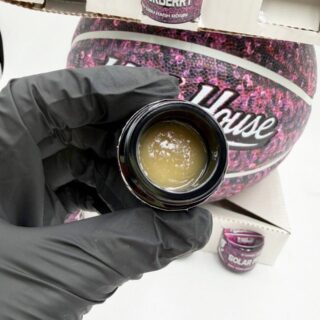
Original price was: $35.00.$34.00Current price is: $34.00.Select options This product has multiple variants. The options may be chosen on the product pageHash House Hash Madness is a 2 gram jar of premium solventless hash rosin extracted through a 90U to 120U micron process and packaged in a signature purple basketball-themed jar designed for dispensary countertop display. Each unit carries the strain name, fill weight, and micron extraction range directly on the label for full transparency at point of sale. No chemical solvents are used at any stage of production. Strains confirmed in the current lineup include Blockberry and Solar Flare, each pressing genuine terpene character from quality input material into the final rosin. For experienced concentrate consumers who take solventless quality seriously, Hash House Hash Madness is the jar to reach for.
-
-
710 Labs Persy Rosin Badder
Original price was: $60.00.$55.00Current price is: $55.00.Add to cart710 Labs Persy Rosin Badder is a solventless cannabis concentrate with a soft, whipped consistency designed for easy handling with compatible concentrate equipment. The Persy designation represents 710 Labs’ premium product tier, while strain, potency and terpene information remain specific to each production batch. Store the sealed jar according to official guidance, purchase only from a licensed retailer and check the label and batch documentation before use.
-
Bubble Hash
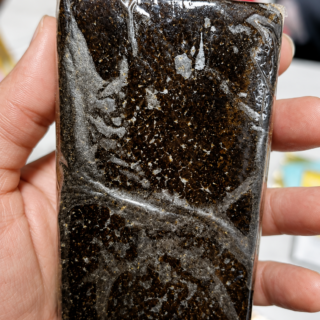
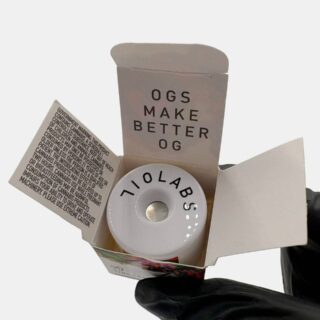
Price range: $100.00 through $1,400.00Select options This product has multiple variants. The options may be chosen on the product pageBubble Hash is a solventless cannabis concentrate made by separating resin-rich trichomes from plant material using ice, cold water, agitation, and filtration. Also known as ice-water hash, it can vary considerably in color, texture, refinement, and melt characteristics. This guide explains what Bubble Hash is, how trichome separation works, what micron grades mean, how to evaluate quality, and how storage and laboratory testing can affect the buying decision.
Latest
-
Purple Oreo Strain
Price range: $350.00 through $600.00
-
Blueberry Dum Dum Strain
Price range: $300.00 through $500.00
-
Grease Candy Strain
Price range: $400.00 through $700.00
-
Y3K Disposable
$20.00
Best Selling
-
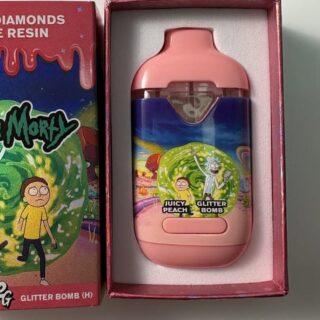 Rick and Morty Disposable Vape
Price range: $20.00 through $900.00
Rick and Morty Disposable Vape
Price range: $20.00 through $900.00
-
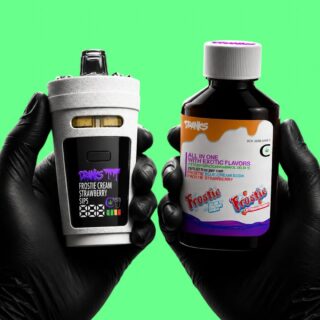
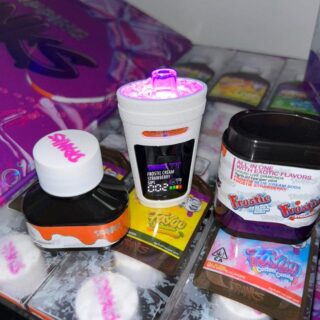 Dranks 2g disposable
Price range: $25.00 through $1,000.00
Dranks 2g disposable
Price range: $25.00 through $1,000.00
-
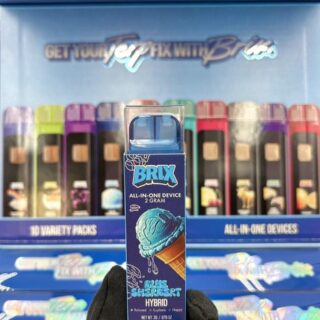 Brix 2G Disposable
Original price was: $25.00.$24.50Current price is: $24.50.
Brix 2G Disposable
Original price was: $25.00.$24.50Current price is: $24.50.
-
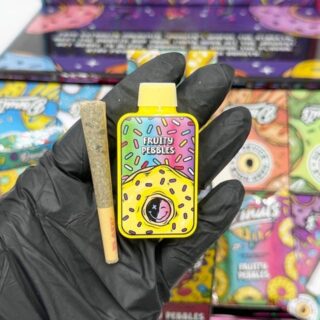 Fryd Donuts 2g Disposable
Price range: $20.00 through $900.00
Fryd Donuts 2g Disposable
Price range: $20.00 through $900.00
Top Rated
-
Purple Oreo Strain
Price range: $350.00 through $600.00
-
Blueberry Dum Dum Strain
Price range: $300.00 through $500.00
-
Grease Candy Strain
Price range: $400.00 through $700.00
About Us

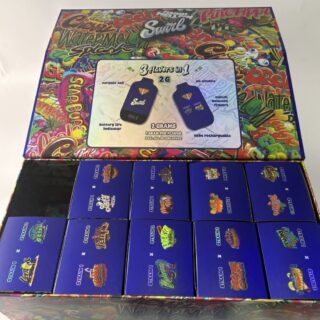
Welcome to Swirl Disposable, your online destination for disposable vape products and cannabis accessories. We are dedicated to providing adult customers with a carefully selected collection of high-quality products from some of the most recognized brands in the industry. Our goal is to make it easy to discover new products, compare options, and shop with confidence through a secure and reliable online experience. We believe that quality products deserve accurate information. That is why we continually improve our product pages with detailed specifications, flavor information, buying guides, and helpful resources that allow customers to make informed purchasing decisions.
Know More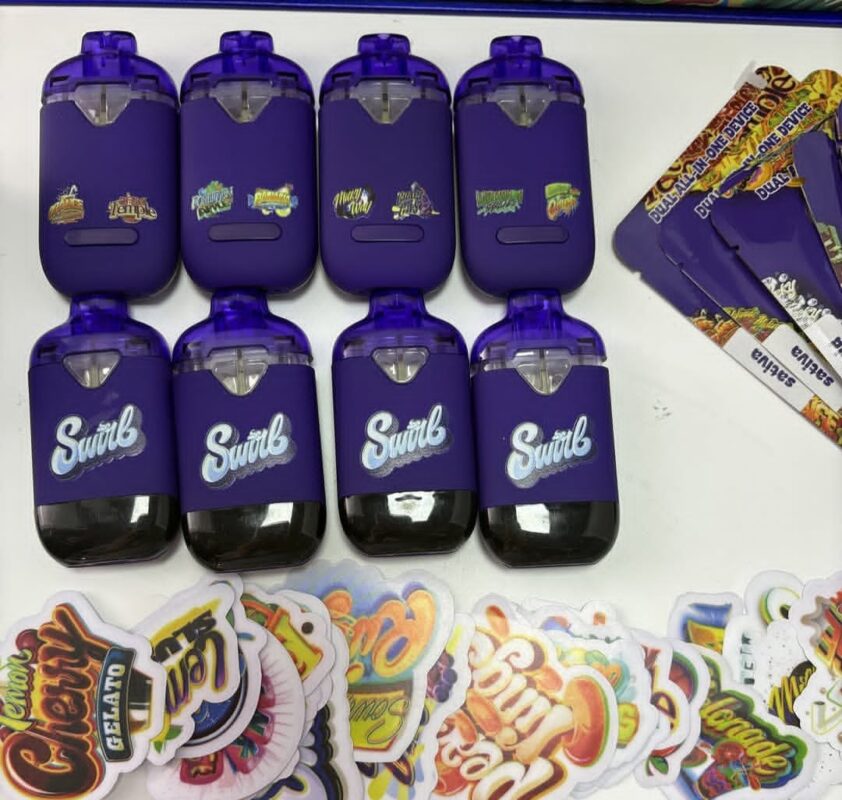
Reviews
There are no reviews yet.